Release notes · TTT15
Todos de Francini-Pontier 1946–1950
Original release notes · 9 November 2026
Download the original release notes (PDF)
The recordings
“Mis hermanos de vida”
Alberto Podestá
Violinist Enrique Mario Francini and bandoneonist Armando Pontier were among the young musicians who helped shape a new sound in Argentine tango during the 1940s. Both had been members of Miguel Caló’s orchestra, where they played alongside musicians such as pianist Osmar Maderna and bandoneonist Domingo Federico. According to singer Alberto Podestá, Francini and Pontier had already planned to form an orchestra of their own when a disagreement between Caló and Maderna led the pianist to leave. The two musicians decided to bring their plans forward, and Podestá recalled that Caló congratulated them and offered to help with their new venture. Caló continued with a renewed line-up, while Francini and Pontier began assembling the ensemble that would bear their names.
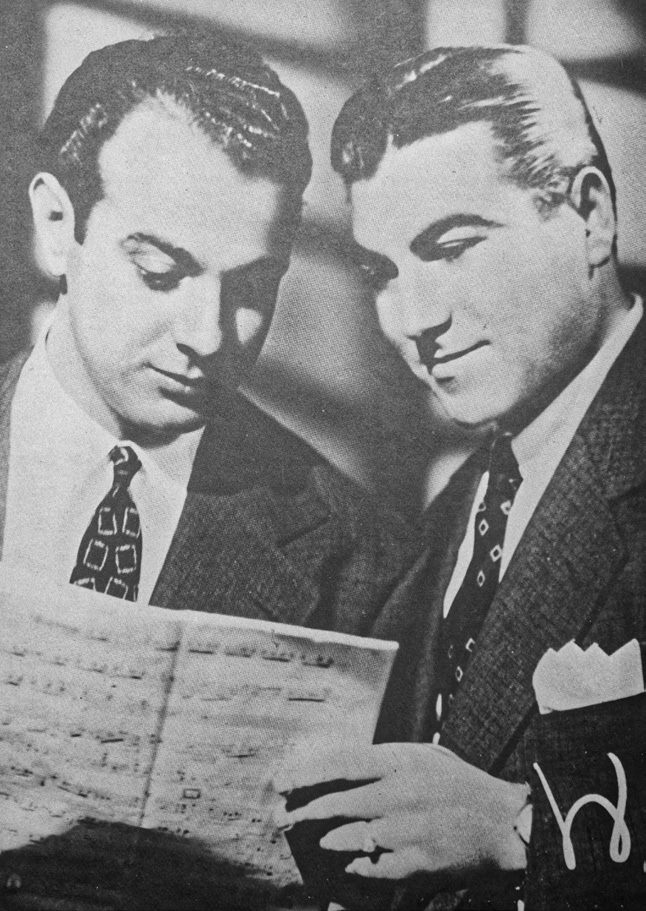
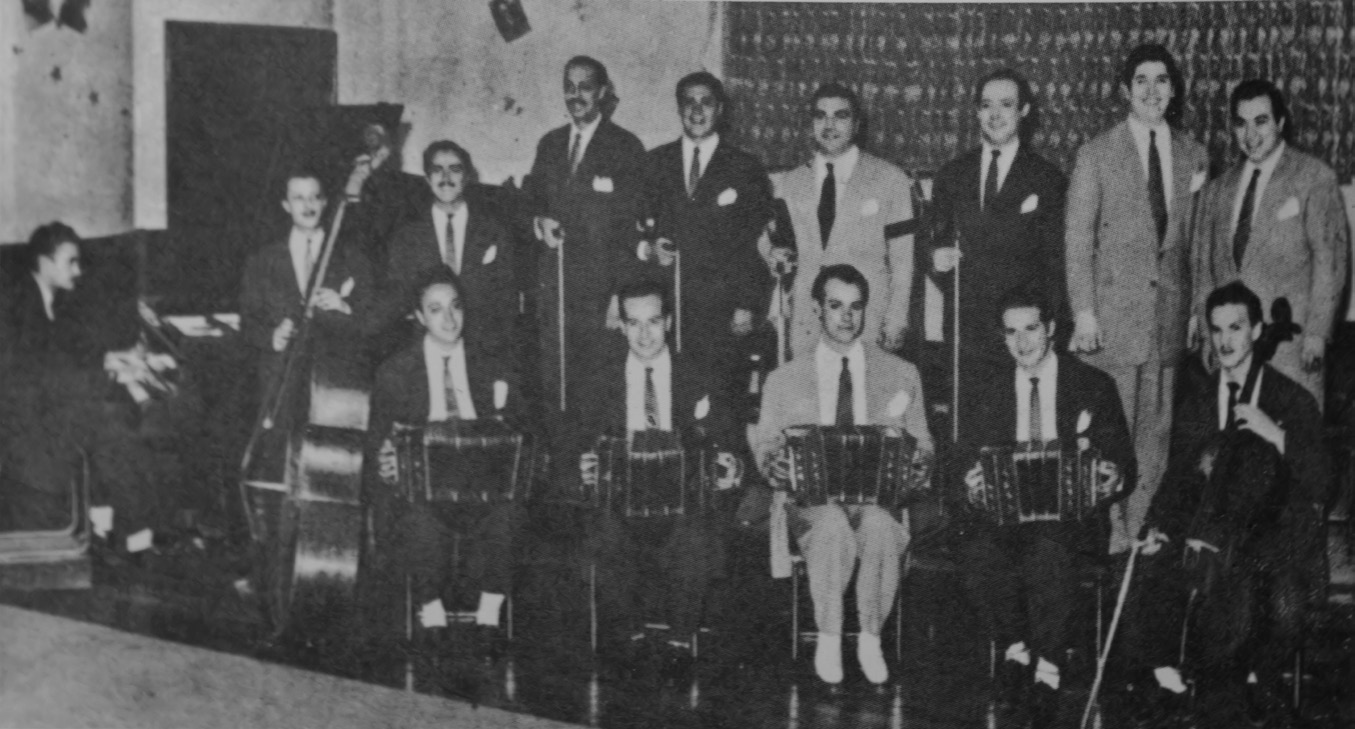
Podestá remembered a rainy day in May 1945 when Francini and Pontier came to his home to tell him about their plans and invite him to join them as their singer. Their orchestra made its debut on 1 September 1945 at the Tango Bar on Avenida Corrientes in Buenos Aires, with Podestá and Raúl Berón as its vocalists. In January 1946, it began recording for RCA Victor, opening a partnership with the label that would continue throughout its first decade. Alongside Podestá and Berón, the orchestra would provide a setting for other distinctive singers, including Roberto Rufino and, from 1949, Julio Sosa.
Francini-Pontier developed a sound that combined expressive melodies, orchestral detail and a clear feeling for the dance floor. The violin and bandoneon were central to its character, reflecting the musical personalities of its two directors. Its sound was also shaped by Argentino Galván, who had previously worked with Caló. Among his contributions was the arrangement of «Tigre viejo», included in this release. Armando Pontier and other arrangers also wrote for the orchestra, and its musical identity cannot be attributed to Galván alone.
Familiar tangos can be heard here through a different orchestral voice. «La yumba», so closely associated with Osvaldo Pugliese, takes on another character in the hands of Francini-Pontier. «A los amigos», a composition by Armando Pontier, is performed in the orchestra’s own distinctive style. These interpretations offer a glimpse of the musical diversity of the era: even when orchestras shared a repertoire, each brought its own sound and personality to a piece.
This release follows the orchestra’s first five years on RCA Victor, from its opening sides «Margo» and «Sirva otra copa» in 1946 through 1950. The 61 recordings comprise 45 tangos, eight valses, six milongas, one ranchera and one fantasía en tango. Twelve are instrumentals and 49 feature vocals, including four duets. The accompanying discography documents 62 recordings from this period. One of them, «El pecoso», is not yet represented in our collection and is therefore absent from the audio release. We hope to be able to add it at a later date.
Our collection also includes all the records needed for a possible follow-up release: the later Francini-Pontier recordings from 1951 to 1955, followed by recordings from Enrique Francini’s own orchestra from 1955 to 1959.
Pitch
As usual, we have analysed the recordings individually to determine the most plausible playback speed for our transfers. In this repertoire, isolated piano notes are often scarce: the bandoneon and violin are at the centre of the orchestra’s sound and generally carry the solo passages. We therefore identified passages in which the piano could be heard as clearly as possible and measured their tuning individually. Where possible, we compared the results with measurements of individual notes and with the recording as a whole.
Our analysis suggests that a concert pitch around A = 440 Hz is a reasonable reference for these RCA Victor recordings from 1946 to 1950. The measurements were considered alongside recording dates, related sides and listening comparisons, particularly where the available piano passages were short or the results varied within a track. We then applied an individual speed correction to each transfer, aiming for a tuning of A = 440 Hz.
These measurements should be understood as estimates: the condition of the source, other instruments sounding alongside the piano, and variations within a recording can all affect the result. Our aim is to present the performances at a plausible pitch and tempo while preserving their musical character.
Discography
The available discographical information on Francini-Pontier’s recordings is scattered across several sources, and matrix numbers are not always complete or consistent. For this release, we have prepared a coordinated discography, bringing together recording dates, titles, singers, catalogue numbers and matrix information.
In particular, we have supplemented and checked the matrix numbers against the shellac records available to us. Where sources give conflicting numbers, the discrepancy is noted in the discography. The document is included in the album archive and is also available as a free download on our website. It remains a work in progress and can be updated as further evidence becomes available.
Formats
This edition is available in the formats: 24-bit/96kHz FLAC, 16-bit/44.1kHz CD-quality AIFF and FLAC, and 320kbps CBR MP3. All formats are derived from the same high-resolution digital master. The differences lie in bit depth, sampling rate, and codec. We have consistently applied a 0.5-second fade-in at the beginning of each track and a 1.0-second fade-out at the end, with an additional 3.0 seconds of trailing silence. If a track already has a diminuendo ending, we have reduced the trailing silence accordingly.
Acknowledgements
Age Akkerman, Amsterdam
For his support, advice, proofreading and guidance on harmonic analysis.
Omar Facelli, Montevideo
For his expertise in 78-rpm records, his extensive knowledge and connections within the tango collector community, and for managing our mini studio in Montevideo.
Original document
Brussels, 9 November 2026
Bénédicte Beauloye & Jens-Ingo Brodesser
TangoTimeTravel.org
The album